Buy studyportal.eu ?
We are moving the project
studyportal.eu .
Are you interested in purchasing the domain
studyportal.eu ?
domain@kv-gmbh.de · 0541-91531010
Buy studyportal.eu ?
Can the direct current cross-section be distributed across multiple cables?
Yes, direct current can be distributed across multiple cables. By connecting multiple cables in parallel, the total current can be divided among the cables, allowing for the distribution of the direct current across them. This method is commonly used in electrical systems to ensure that the current is evenly distributed and to prevent overloading of individual cables. **
How do I determine the polarity of cables in direct current?
To determine the polarity of cables in direct current, you can use a multimeter set to the DC voltage setting. Connect the red probe to the positive terminal of the cable and the black probe to the negative terminal. If the multimeter shows a positive reading, then the red probe is connected to the positive terminal. If the reading is negative, then the red probe is connected to the negative terminal. This method helps you identify the polarity of the cables accurately. **

Similar search terms for Cables-Direct-3m-FireWire
Top-Angebote
Products related to Cables-Direct-3m-FireWire:
-
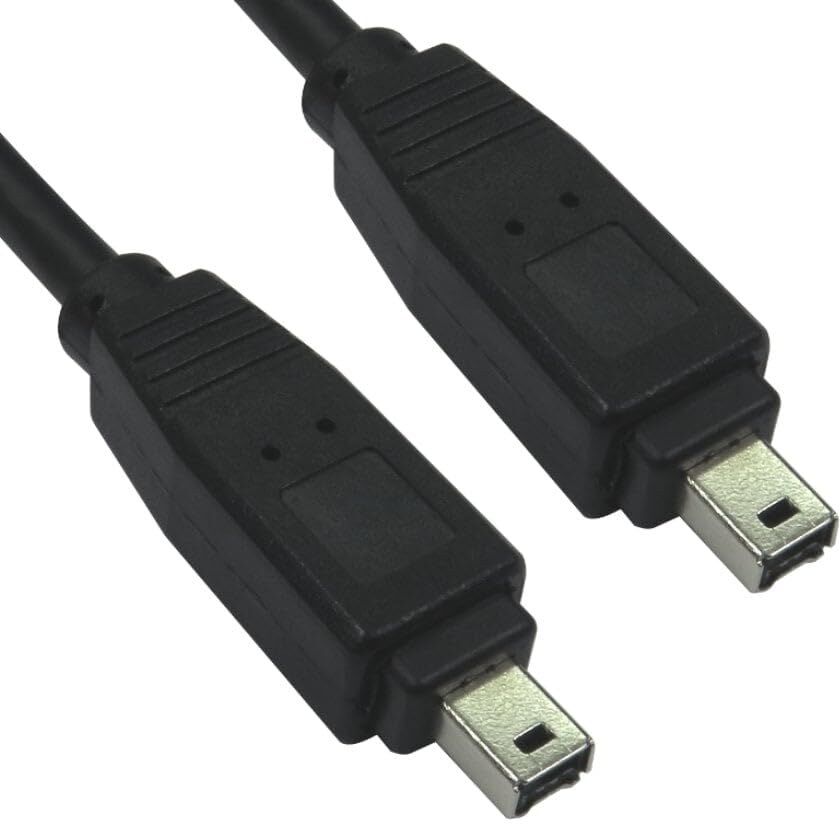
Cables Direct 3m FireWire 400 (IEEE 1394) 6-Pin Male to 4-Pin Male CableThis 6-pin to 4-pin FireWire cable, part of the CDL-140 series, is perfect for linking digital cameras and camcorders to a PC or laptop, given that a FireWire port is present.10,99 £*Shipping: 0,00 £Secure redirect to the provider
-
Cables Direct 3m 3.5mm Stereo Extension CableOur budget-friendly audio cables feature Nickel connectors, perfect for extending audio signals between devices with 3.5mm inputs and outputs. The male connector, also known as TRS or Tip Ring Sleeve, ensures compatibility.9,99 £*Shipping: 0,00 £Secure redirect to the provider
-
Cables Direct 3m USB 3.0 Extension CableThe 99CDL-82 series of 'SuperSpeed USB' Type A (male) to Type A (female) cables facilitate data transfer at up to 5 Gbit/s (625 MB/s), roughly ten times faster than USB 2.0. This standard cable type extends the length of another USB 3.0 cable. Officially, it's known as USB3.2 Gen 1, previously USB3.1 Gen 1 or USB 3.0.10,99 £*Shipping: 0,00 £Secure redirect to the provider


-
Do you need thicker cables for direct current than for alternating current?
No, you do not necessarily need thicker cables for direct current (DC) than for alternating current (AC). The current-carrying capacity of a cable is determined by factors such as the material, size, and insulation of the cable, as well as the voltage and current being carried. Both DC and AC have their own unique considerations when it comes to cable sizing, but the need for thicker cables is not inherently tied to the type of current being carried. It ultimately depends on the specific requirements of the electrical system and the application. **
-
How does the stress on cables differ between direct current and alternating current?
In direct current (DC) systems, the stress on cables is relatively constant because the current flows in one direction continuously. This results in a steady and predictable stress level on the cables. On the other hand, in alternating current (AC) systems, the stress on cables fluctuates as the current changes direction periodically. This can lead to higher stress levels on the cables, especially during peak currents, which may require cables to be designed to withstand these fluctuations. **
-
Why does the voltage tester light up on both cables in direct current?
The voltage tester lights up on both cables in direct current because in a direct current circuit, the flow of electric charge is unidirectional. This means that the current flows from the positive terminal to the negative terminal of the power source. When the voltage tester is connected to the cables, it detects the presence of electric potential difference between the two points, causing the light to illuminate on both cables. This indicates that there is a voltage present in the circuit, regardless of the direction of the current flow. **
-
Which degree and which university or college?
I have a Bachelor's degree in Computer Science from Stanford University. **


What is the difference between direct and indirect education?
Direct education involves face-to-face interaction between the educator and the learner, such as in a traditional classroom setting. In contrast, indirect education refers to learning that occurs through resources or mediums that do not involve direct interaction, such as textbooks, online courses, or educational videos. Direct education allows for immediate feedback and clarification, while indirect education offers flexibility in terms of time and location of learning. **
Do your parents have a college or university degree?
Yes, both of my parents have college degrees. My mother has a bachelor's degree in education, and my father has a master's degree in business administration. Their education has been a source of inspiration for me and has instilled in me the value of higher education. They have always encouraged me to pursue my academic goals and have been supportive of my educational journey. **
Top-Angebote
Products related to Cables-Direct-3m-FireWire:
-
Cables Direct 3m FireWire 400 (IEEE 1394) 6-Pin Male to 6-Pin Male CableThe CDL-130 range is a FireWire 6pin to 6pin cable that measures between 1 and 5 metres in length. It is for connecting FireWire devices such as digital cameras and camcorders to a PC or laptop, providing the PC or laptop has a 6pin FireWire port."}. Please provide the JSON output for the given product description. {"description": "The CDL-130 range is a FireWire 6pin to 6pin cable that measures between 1 and 5 metres in length. It is for connecting FireWire devices such as digital cameras and camcorders to a PC or laptop, providing the PC or laptop has a 6pin FireWire port.11,99 £*Shipping: 0,00 £Secure redirect to the provider
-
Cables Direct 3m FireWire 400 (IEEE 1394) 6-Pin Male to 4-Pin Male CableThis 6-pin to 4-pin FireWire cable, part of the CDL-140 series, is perfect for linking digital cameras and camcorders to a PC or laptop, given that a FireWire port is present.10,99 £*Shipping: 0,00 £Secure redirect to the provider
-
Can the direct current cross-section be distributed across multiple cables?
Yes, direct current can be distributed across multiple cables. By connecting multiple cables in parallel, the total current can be divided among the cables, allowing for the distribution of the direct current across them. This method is commonly used in electrical systems to ensure that the current is evenly distributed and to prevent overloading of individual cables. **
-
How do I determine the polarity of cables in direct current?
To determine the polarity of cables in direct current, you can use a multimeter set to the DC voltage setting. Connect the red probe to the positive terminal of the cable and the black probe to the negative terminal. If the multimeter shows a positive reading, then the red probe is connected to the positive terminal. If the reading is negative, then the red probe is connected to the negative terminal. This method helps you identify the polarity of the cables accurately. **
-
Do you need thicker cables for direct current than for alternating current?
No, you do not necessarily need thicker cables for direct current (DC) than for alternating current (AC). The current-carrying capacity of a cable is determined by factors such as the material, size, and insulation of the cable, as well as the voltage and current being carried. Both DC and AC have their own unique considerations when it comes to cable sizing, but the need for thicker cables is not inherently tied to the type of current being carried. It ultimately depends on the specific requirements of the electrical system and the application. **
-
How does the stress on cables differ between direct current and alternating current?
In direct current (DC) systems, the stress on cables is relatively constant because the current flows in one direction continuously. This results in a steady and predictable stress level on the cables. On the other hand, in alternating current (AC) systems, the stress on cables fluctuates as the current changes direction periodically. This can lead to higher stress levels on the cables, especially during peak currents, which may require cables to be designed to withstand these fluctuations. **
Similar search terms for Cables-Direct-3m-FireWire
-
Cables Direct 3m 3.5mm Stereo Extension CableOur budget-friendly audio cables feature Nickel connectors, perfect for extending audio signals between devices with 3.5mm inputs and outputs. The male connector, also known as TRS or Tip Ring Sleeve, ensures compatibility.9,99 £*Shipping: 0,00 £Secure redirect to the provider
-
Cables Direct 3m USB 3.0 Extension CableThe 99CDL-82 series of 'SuperSpeed USB' Type A (male) to Type A (female) cables facilitate data transfer at up to 5 Gbit/s (625 MB/s), roughly ten times faster than USB 2.0. This standard cable type extends the length of another USB 3.0 cable. Officially, it's known as USB3.2 Gen 1, previously USB3.1 Gen 1 or USB 3.0.10,99 £*Shipping: 0,00 £Secure redirect to the provider
-
Cables Direct 3m HDMI 1.4 Extension CableHDMI, a digital interface for audiovisual devices, merges video and audio. It supports standard to high-definition video and multi-channel surround-sound. The CDLHD-4 series is a gold-plated HDMI male-to-female extension cable.12,99 £*Shipping: 0,00 £Secure redirect to the provider
-
Why does the voltage tester light up on both cables in direct current?
The voltage tester lights up on both cables in direct current because in a direct current circuit, the flow of electric charge is unidirectional. This means that the current flows from the positive terminal to the negative terminal of the power source. When the voltage tester is connected to the cables, it detects the presence of electric potential difference between the two points, causing the light to illuminate on both cables. This indicates that there is a voltage present in the circuit, regardless of the direction of the current flow. **
-
Which degree and which university or college?
I have a Bachelor's degree in Computer Science from Stanford University. **
-
What is the difference between direct and indirect education?
Direct education involves face-to-face interaction between the educator and the learner, such as in a traditional classroom setting. In contrast, indirect education refers to learning that occurs through resources or mediums that do not involve direct interaction, such as textbooks, online courses, or educational videos. Direct education allows for immediate feedback and clarification, while indirect education offers flexibility in terms of time and location of learning. **
-
Do your parents have a college or university degree?
Yes, both of my parents have college degrees. My mother has a bachelor's degree in education, and my father has a master's degree in business administration. Their education has been a source of inspiration for me and has instilled in me the value of higher education. They have always encouraged me to pursue my academic goals and have been supportive of my educational journey. **
* All prices are inclusive of VAT and, if applicable, plus shipping costs. The offer information is based on the details provided by the respective shop and is updated through automated processes. Real-time updates do not occur, so deviations can occur in individual cases. ** Note: Parts of this content were created by AI.