Buy studyportal.eu ?
We are moving the project
studyportal.eu .
Are you interested in purchasing the domain
studyportal.eu ?
domain@kv-gmbh.de · 0541-91531010
Buy studyportal.eu ?
Which Santoku?
When choosing a Santoku knife, it is important to consider the blade material, handle design, and overall comfort and balance of the knife. High-quality Santoku knives are typically made of high-carbon stainless steel for durability and sharpness. Look for a knife with a comfortable handle that provides a secure grip to prevent slipping during use. Ultimately, the best Santoku knife for you will depend on your personal preferences and cooking style. **
What is a Santoku used for?
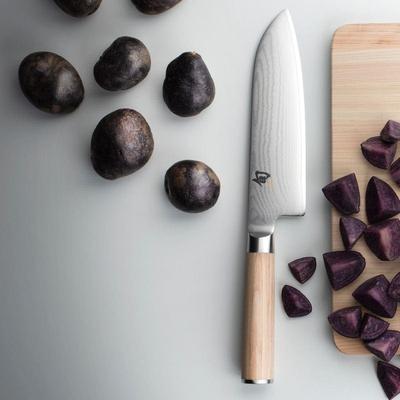
A Santoku knife is a versatile Japanese knife that is used for a variety of kitchen tasks. Its name translates to "three virtues" or "three uses," referring to its ability to handle slicing, dicing, and mincing. The Santoku is designed for precision cutting, making it ideal for preparing vegetables, fruits, and boneless meats. Its wide blade and sharp edge make it well-suited for both chopping and slicing, making it a popular choice for home cooks and professional chefs alike. **

Similar search terms for Santoku
Top-Angebote
Products related to Santoku:
-
Scanpan Classic 12.5cm Santoku KnifeThe Scanpan Classic 12.5cm Santoku is designed to help you cut paper thin slices on food, as well as dice finely. The Scanpan Classic 12.5cm Santoku contains a scalloped edge blades to help prevent ingredients from sticking to the knife. Part of the Scanpan Classic knife collection. Knives are not for sale to persons under the age of 18. - all knives and bladed products are delivered by Age Verified Delivery (AVD). The carrier may request proof of age in order to deliver your parcel. If proof of age is not available, or the recipient is underage, the carrier will refuse to deliver.39,60 £*Shipping: 3,50 £Secure redirect to the provider
-
Scanpan Classic 18cm Santoku KnifeThe Scanpan Classic 18cm Santoku is designed to help you cut paper thin slices on food, as well as dice finely. The Scanpan Classic 18cm Santoku contains a scalloped edge blades to help prevent ingredients from sticking to the knife. Part of the Scanpan Classic knife collection. Knives are not for sale to persons under the age of 18. - all knives and bladed products are delivered by Age Verified Delivery (AVD). The carrier may request proof of age in order to deliver your parcel. If proof of age is not available, or the recipient is underage, the carrier will refuse to deliver.53,10 £*Shipping: 0,00 £Secure redirect to the provider
-
Kasumi 18cm Santoku/Chef's KnifeThis Kasumi 18cm santoku/chef's knife is made from 32 layer Damascus steel with a 59-60 Rockwell hardness. The full tang laminated wooden handle is riveted for extra strength and durability. This 18cm santoku/chef's knife is perfect slicing and dicing when preparing food, especially fruit and vegetables. Made in Seki, Japan. Knives are not for sale to persons under the age of 18. - all knives and bladed products are delivered by Age Verified Delivery (AVD). The carrier may request proof of age in order to deliver your parcel. If proof of age is not available, or the recipient is underage, the carrier will refuse to deliver.159,95 £*Shipping: 0,00 £Secure redirect to the provider




-
Which is better, a Santoku knife or a chef's knife?
The choice between a Santoku knife and a chef's knife ultimately depends on personal preference and the specific tasks you will be using the knife for. Santoku knives are known for their versatility and are great for slicing, dicing, and mincing, making them a popular choice for everyday cooking. On the other hand, chef's knives are more all-purpose and can handle a wider range of tasks, including chopping, slicing, and even some light cleaver work. If you are looking for a knife that can handle a variety of tasks, a chef's knife may be the better option. However, if you prioritize precision and control in your cutting, a Santoku knife may be the better choice. **
-
Which degree and which university or college?
I have a Bachelor's degree in Computer Science from Stanford University. **
-
Do your parents have a college or university degree?
Yes, both of my parents have college degrees. My mother has a bachelor's degree in education, and my father has a master's degree in business administration. Their education has been a source of inspiration for me and has instilled in me the value of higher education. They have always encouraged me to pursue my academic goals and have been supportive of my educational journey. **
-
Should one pursue a university degree or further education?
Pursuing a university degree or further education depends on an individual's career goals, interests, and financial situation. A university degree can provide valuable knowledge, skills, and credentials that can lead to better job opportunities and higher earning potential. However, further education, such as a master's or professional certification, can also enhance one's expertise and qualifications in a specific field. It's important to carefully consider the potential return on investment and weigh the costs and benefits of pursuing further education before making a decision. **


Is a college degree equivalent, higher or lower than a degree from a university?
A college degree is typically lower than a degree from a university. In the United States, a college degree is usually a 2-year associate's degree or a 4-year bachelor's degree, while a university degree often refers to a higher level of education such as a master's or doctoral degree. Universities tend to offer a wider range of academic programs and research opportunities compared to colleges, making their degrees more advanced and prestigious. **
How can one complete a degree at a university or college?
To complete a degree at a university or college, one must first choose a program of study that aligns with their interests and career goals. Then, they must fulfill all the required coursework, which typically includes a combination of general education requirements and courses specific to their major. Additionally, students must maintain a certain GPA, participate in internships or research projects, and pass any necessary exams or assessments. Finally, once all requirements are met, students can graduate with their degree. **
Top-Angebote
Products related to Santoku:
-
Kasumi 13cm Santoku KnifeThis Kasumi 13cm santoku knife is made from 32 layer Damascus steel with a 59-60 Rockwell hardness. The full tang laminated wooden handle is riveted for extra strength and durability. The 13cm santoku knife is great for medium sized vegetables especially courgettes and aubergines. Made in Seki, Japan. Knives are not for sale to persons under the age of 18. - all knives and bladed products are delivered by Age Verified Delivery (AVD). The carrier may request proof of age in order to deliver your parcel. If proof of age is not available, or the recipient is underage, the carrier will refuse to deliver.119,95 £*Shipping: 0,00 £Secure redirect to the provider
-
Scanpan Classic 12.5cm Santoku KnifeThe Scanpan Classic 12.5cm Santoku is designed to help you cut paper thin slices on food, as well as dice finely. The Scanpan Classic 12.5cm Santoku contains a scalloped edge blades to help prevent ingredients from sticking to the knife. Part of the Scanpan Classic knife collection. Knives are not for sale to persons under the age of 18. - all knives and bladed products are delivered by Age Verified Delivery (AVD). The carrier may request proof of age in order to deliver your parcel. If proof of age is not available, or the recipient is underage, the carrier will refuse to deliver.39,60 £*Shipping: 3,50 £Secure redirect to the provider
-
Which Santoku?
When choosing a Santoku knife, it is important to consider the blade material, handle design, and overall comfort and balance of the knife. High-quality Santoku knives are typically made of high-carbon stainless steel for durability and sharpness. Look for a knife with a comfortable handle that provides a secure grip to prevent slipping during use. Ultimately, the best Santoku knife for you will depend on your personal preferences and cooking style. **
-
What is a Santoku used for?
A Santoku knife is a versatile Japanese knife that is used for a variety of kitchen tasks. Its name translates to "three virtues" or "three uses," referring to its ability to handle slicing, dicing, and mincing. The Santoku is designed for precision cutting, making it ideal for preparing vegetables, fruits, and boneless meats. Its wide blade and sharp edge make it well-suited for both chopping and slicing, making it a popular choice for home cooks and professional chefs alike. **
-
Which is better, a Santoku knife or a chef's knife?
The choice between a Santoku knife and a chef's knife ultimately depends on personal preference and the specific tasks you will be using the knife for. Santoku knives are known for their versatility and are great for slicing, dicing, and mincing, making them a popular choice for everyday cooking. On the other hand, chef's knives are more all-purpose and can handle a wider range of tasks, including chopping, slicing, and even some light cleaver work. If you are looking for a knife that can handle a variety of tasks, a chef's knife may be the better option. However, if you prioritize precision and control in your cutting, a Santoku knife may be the better choice. **
-
Which degree and which university or college?
I have a Bachelor's degree in Computer Science from Stanford University. **
Similar search terms for Santoku
-
Scanpan Classic 18cm Santoku KnifeThe Scanpan Classic 18cm Santoku is designed to help you cut paper thin slices on food, as well as dice finely. The Scanpan Classic 18cm Santoku contains a scalloped edge blades to help prevent ingredients from sticking to the knife. Part of the Scanpan Classic knife collection. Knives are not for sale to persons under the age of 18. - all knives and bladed products are delivered by Age Verified Delivery (AVD). The carrier may request proof of age in order to deliver your parcel. If proof of age is not available, or the recipient is underage, the carrier will refuse to deliver.53,10 £*Shipping: 0,00 £Secure redirect to the provider
-
Kasumi 18cm Santoku/Chef's KnifeThis Kasumi 18cm santoku/chef's knife is made from 32 layer Damascus steel with a 59-60 Rockwell hardness. The full tang laminated wooden handle is riveted for extra strength and durability. This 18cm santoku/chef's knife is perfect slicing and dicing when preparing food, especially fruit and vegetables. Made in Seki, Japan. Knives are not for sale to persons under the age of 18. - all knives and bladed products are delivered by Age Verified Delivery (AVD). The carrier may request proof of age in order to deliver your parcel. If proof of age is not available, or the recipient is underage, the carrier will refuse to deliver.159,95 £*Shipping: 0,00 £Secure redirect to the provider
-
Sabatier Professional 13cm Santoku KnifeFeaturing a bolster and a full tang, 3 rivet construction, this Sabatier Professional 13cm Santoku Knife is based on a traditional design that dates back over 150 years and has its roots in Thiers, France. Crafted from premium quality chrome-molybdenum-vanadium stainless steel, the fine taper-ground blade on this Sabatier santoku knife is difficult to blunt, yet easy to sharpen. Blade length: 13cm. This 13cm santoku knife is dishwasher safe, although hand washing is recommended. This Sabatier Professional 13cm Santoku Knife is supplied with a manufacturer's 25 year guarantee. Knives are not for sale to persons under the age of 18. - all knives and bladed products are delivered by Age Verified Delivery (AVD). The carrier may request proof of age in order to deliver your parcel. If proof of age is not available, or the recipient is underage, the carrier will refuse to deliver.18,00 £*Shipping: 3,50 £Secure redirect to the provider
-
Sabatier Professional 18cm Santoku KnifeFeaturing a bolster and a full tang, 3 rivet construction, this Sabatier Professional 18cm Santoku Knife is based on a traditional design that dates back over 150 years and has its roots in Thiers, France. Crafted from premium quality chrome-molybdenum-vanadium stainless steel, the fine taper-ground blade on this Sabatier santoku knife is difficult to blunt, yet easy to sharpen. Blade length: 18cm. This 18cm santoku knife is dishwasher safe, although hand washing is recommended. This Sabatier Professional 18cm Santoku Knife is supplied with a manufacturer's 25 year guarantee. Knives are not for sale to persons under the age of 18. - all knives and bladed products are delivered by Age Verified Delivery (AVD). The carrier may request proof of age in order to deliver your parcel. If proof of age is not available, or the recipient is underage, the carrier will refuse to deliver.20,00 £*Shipping: 3,50 £Secure redirect to the provider
-
Do your parents have a college or university degree?
Yes, both of my parents have college degrees. My mother has a bachelor's degree in education, and my father has a master's degree in business administration. Their education has been a source of inspiration for me and has instilled in me the value of higher education. They have always encouraged me to pursue my academic goals and have been supportive of my educational journey. **
-
Should one pursue a university degree or further education?
Pursuing a university degree or further education depends on an individual's career goals, interests, and financial situation. A university degree can provide valuable knowledge, skills, and credentials that can lead to better job opportunities and higher earning potential. However, further education, such as a master's or professional certification, can also enhance one's expertise and qualifications in a specific field. It's important to carefully consider the potential return on investment and weigh the costs and benefits of pursuing further education before making a decision. **
-
Is a college degree equivalent, higher or lower than a degree from a university?
A college degree is typically lower than a degree from a university. In the United States, a college degree is usually a 2-year associate's degree or a 4-year bachelor's degree, while a university degree often refers to a higher level of education such as a master's or doctoral degree. Universities tend to offer a wider range of academic programs and research opportunities compared to colleges, making their degrees more advanced and prestigious. **
-
How can one complete a degree at a university or college?
To complete a degree at a university or college, one must first choose a program of study that aligns with their interests and career goals. Then, they must fulfill all the required coursework, which typically includes a combination of general education requirements and courses specific to their major. Additionally, students must maintain a certain GPA, participate in internships or research projects, and pass any necessary exams or assessments. Finally, once all requirements are met, students can graduate with their degree. **
* All prices are inclusive of VAT and, if applicable, plus shipping costs. The offer information is based on the details provided by the respective shop and is updated through automated processes. Real-time updates do not occur, so deviations can occur in individual cases. ** Note: Parts of this content were created by AI.